> For the complete documentation index, see [llms.txt](https://enterprise-docs.datacamp.com/llms.txt). Markdown versions of documentation pages are available by appending `.md` to page URLs; this page is available as [Markdown](https://enterprise-docs.datacamp.com/optimizing-key-performance-indicators-via-the-groups-tab/reporting-section/content-insights/courses.md).
# Courses
This section shows different metrics related to courses, one of our platform's principal tools for learning.
* Below is a brief description of each metric shown:
* [Courses started](#courses-started)
* [Courses completed](#courses-completed)
* [Completion rate](#completion-rate)
* [Most started courses](#most-started-courses)
* [Most completed courses](#most-completed-courses)
* [Most popular course technologies](#most-popular-course-technologies)
* [Most popular course topics](#most-popular-course-topics)
* [Course Activity](#course-activity)
### Courses started
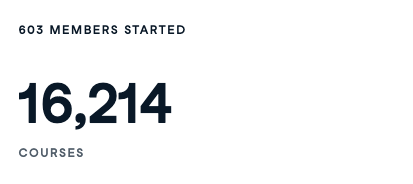
* The card shows the courses started and the number of users who started them (all-time).
### Courses completed
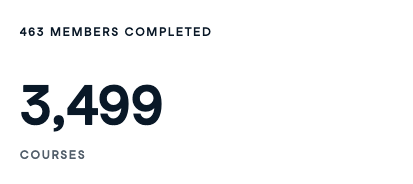
* The card shows the courses completed and the number of users who completed them (all-time).
### Completion rate
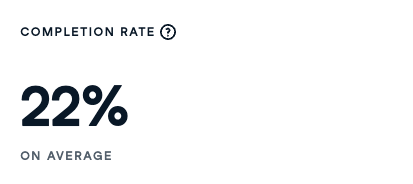
* The card shows the completion rate (completions divided by starts) for courses (all-time).
### Most started courses
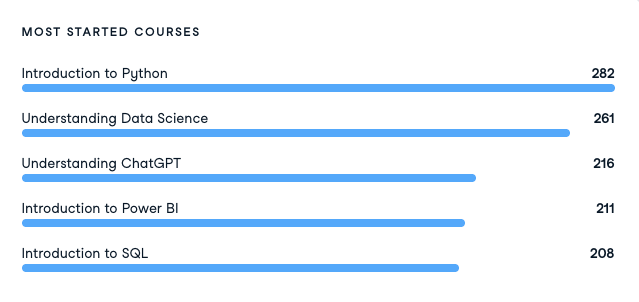
* The chart shows the top 5 courses by starts (all-time).
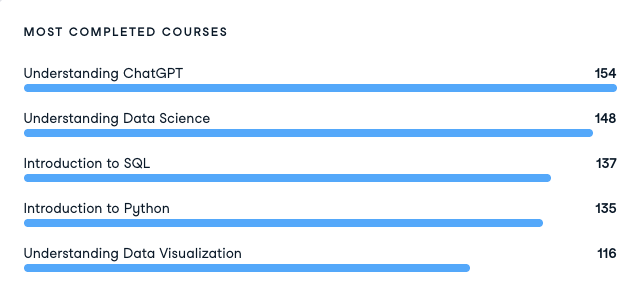
### Most completed courses
* The chart shows the top 5 courses by completions (all-time).
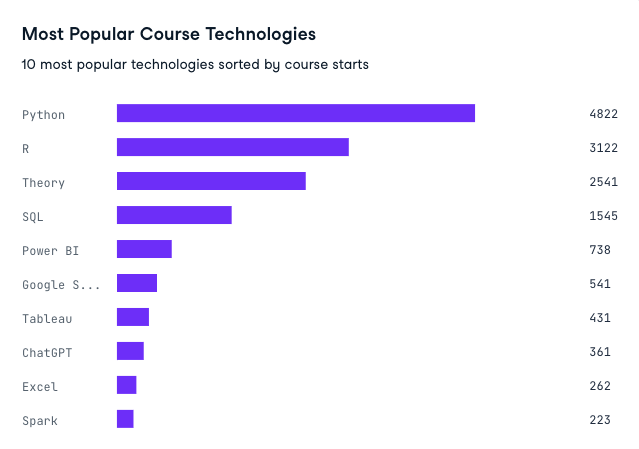
### Most popular course technologies
* The graph shows the ten technologies (Python, R, ChatGPT, etc.) with the most course starts (all-time).
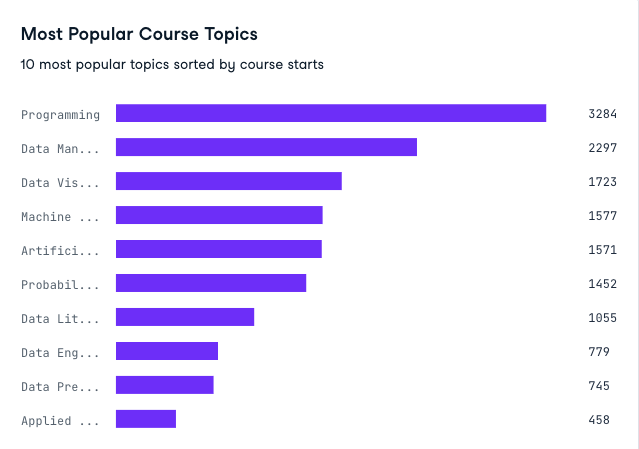
### Most popular course topics
* The graph shows the ten topics (Programming, Data Manipulation, Artificial Intelligence, etc.) with the most course starts (all-time).
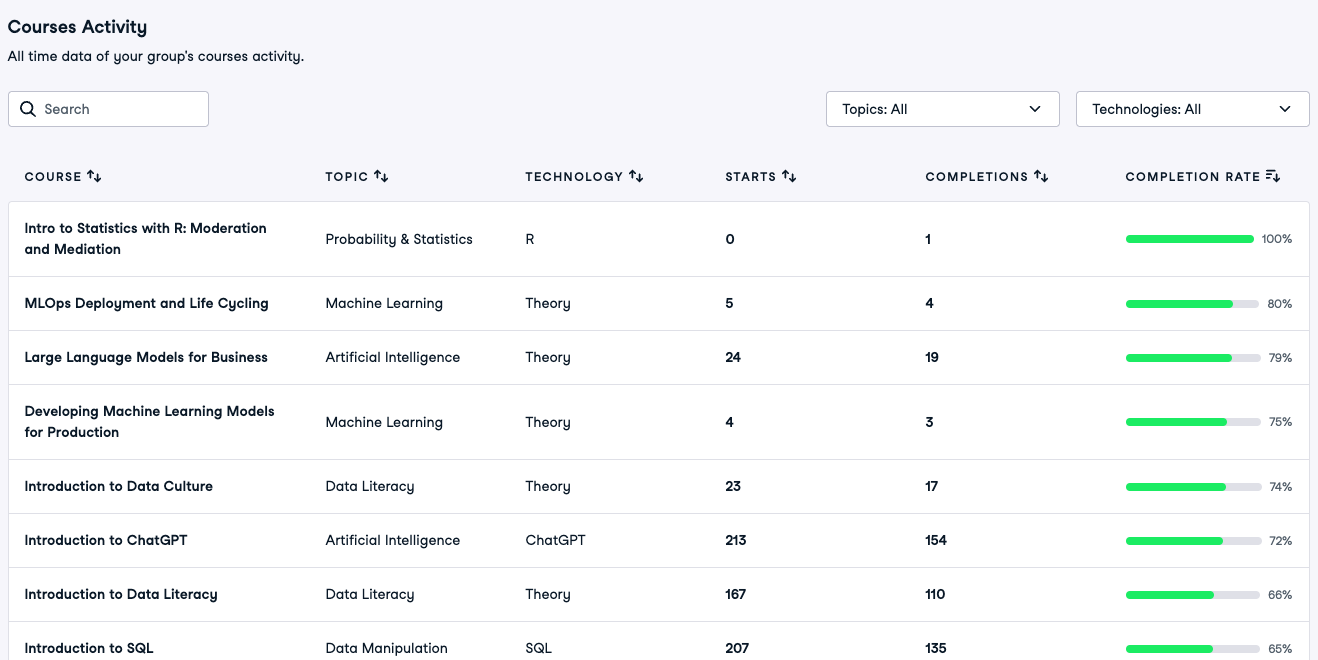
### Course Activity
* The table shows the course title, topic, technology, starts, completions, and completion rate (completions divided by starts) for all courses with at least one start (all-time).
* The report can be filtered by topic (Programming, Data Manipulation, Artificial Intelligence, etc.) or technology (Python, R, ChatGPT, etc.)
* The search box can be used to find a particular course.